A global business continuity framework
Risk audits and continuity planning for a manufacturer supplying the pharmaceutical sector.


Loading page…
Develop practical governance, recovery strategies, response procedures, and continuity plans for critical operations.
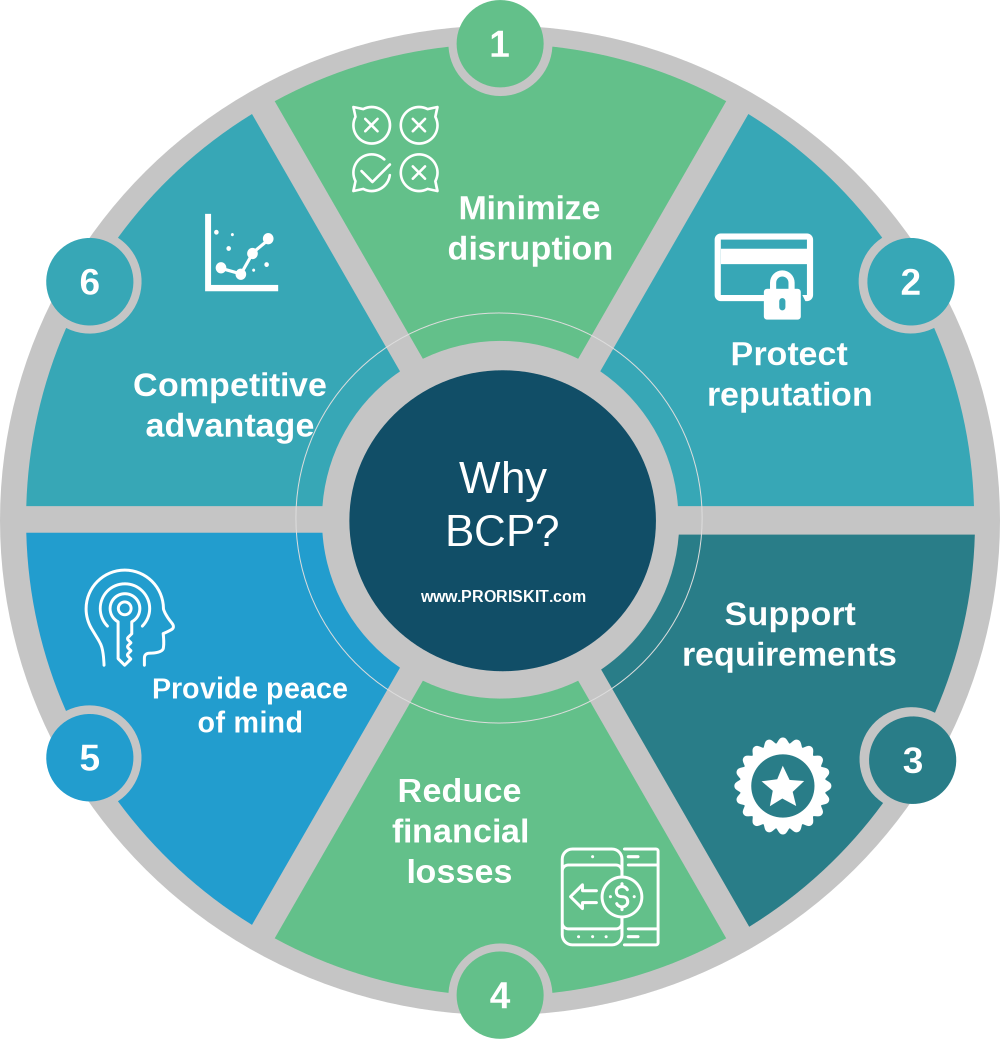
Identify critical activities and their dependencies. Prepare alternative ways of working and recovery arrangements so your organisation can continue or resume essential operations during an incident.
Disruption also affects customers, employees and partners. Clear responsibilities and prepared communication help you respond consistently and manage expectations carefully.
Continuity planning helps you translate relevant expectations from contracts, standards and sector requirements into concrete arrangements. The requirements depend on your organisation. A plan alone does not demonstrate compliance or certification.
Downtime can lead to lost revenue and additional costs. Setting recovery priorities in advance helps you allocate people and resources more effectively and limit avoidable losses.
Knowing who decides, which actions are needed and how teams work together provides direction under pressure. Exercises help employees become familiar with their roles and reveal where arrangements need improvement.
Customers and partners want to know how you handle disruption. Current plans and exercised arrangements make your preparation tangible and can strengthen your position as a reliable business partner.
When plans are missing, fragmented or outdated, or when response and recovery responsibilities need to be made clear.
For management and continuity leaders whose plans are missing, fragmented or no longer reflect operations. The starting point may be one critical site, a department or a programme across locations. The scope should connect business priorities with the people responsible for response and recovery.
The assignment is scoped around your critical operations, current arrangements and management priorities.
Deliverables are agreed around your organisation’s critical activities and current arrangements. The purpose is to give the people responsible for continuity a usable set of plans and clear next steps.
Agree governance, scope and responsibilities, then use business impact and dependency analysis to establish recovery priorities. Translate those priorities into recovery strategies and practical plans, including escalation and communication. Training and exercises help teams review how the arrangements work together; maintenance keeps the plans aligned with operational changes.
Yes. An independent readiness assessment can review existing governance, BIA, dependencies, plans, roles, exercises and maintenance. Its gap analysis and prioritised roadmap provide a basis for deciding which arrangements to improve. The scope is agreed around the current programme rather than assuming that every plan must be replaced.
ProRiskIT identifies business-critical IT dependencies and business recovery requirements. Detailed technical recovery architecture, backup configuration and failover implementation remain with your IT team or specialist providers. These responsibilities should be clear when connecting the business continuity plan with technical recovery arrangements.
Identify which activities must continue, who owns the existing plans and where responsibilities or recovery priorities are unclear. If you already have a BIA, continuity plans or exercise findings, describe their scope and when they were last reviewed. We can then discuss whether to build on existing arrangements or address specific gaps. Agree a secure way to share sensitive documents after the first contact.
Risk audits and continuity planning for a manufacturer supplying the pharmaceutical sector.
Recurring risk and ESG audits, continuity plans and global protection standards for an automotive organisation.
Technical IT disaster-recovery engineering, certification and formal compliance approval are not claimed. Specialist scope and responsibilities are agreed for each assignment.